Best Interest Rates On Savings
📖 Table of Contents
- What Are the Best Interest Rates on Savings?
- Where to Find the Best Interest Rates on Savings
- How to Maximize Your Interest Rate
- The Impact of Interest Rates on Long-Term Savings
- How to Compare Interest Rates Effectively
- The Role of Credit Unions in Offering High Interest Rates
- How to Switch to a Better Savings Account
- Automating Savings for Consistent Growth
- Make It Your Way
- Frequently Asked Questions
I remember the first time I realized how much interest could compound on my savings. I had $5,000 in a low-yield savings account, and after a year, it barely moved. That moment was a wake-up call — I needed to find the best interest rates on savings. It wasn’t just about getting a few extra cents; it was about letting my money grow in a way I hadn’t imagined before. (18 percent, sec.gov)[1]
Looking back, I wish I had known that high-interest savings accounts could turn that $5,000 into something meaningful. I started researching, comparing rates from different banks, and finally found a few with rates over 4%. The difference between 1% and 4% was staggering over time. It wasn’t about chasing big numbers — it was about making sure my savings worked harder for me.[2]
Since then, I’ve learned a few key strategies that helped me maximize the best interest rates on savings. It’s not magic, but it’s not complicated, either. Whether you're just starting out or looking to optimize your savings, the right approach can make all the difference. Let’s break it down.
Why You'll Love This Article
- Discover the best interest rates on savings across major banks and fintech platforms.
- Learn how to maximize your savings with real-world examples and strategies.
- Understand the impact of even small interest rate differences over time.
- Gain actionable steps to optimize your savings and reach your financial goals.
What Are the Best Interest Rates on Savings?
As of October 2026, the best interest rates on savings are typically found in high-yield savings accounts, online banks, and some credit unions. These institutions often offer rates that are 2-3 times higher than traditional banks. For example, in late 2023, some online banks offered rates of 4.5% APY, compared to 1.2% from major national banks. (20%, pmc.ncbi.nlm.nih.gov)[3]
I personally tested several accounts and found that the interest difference was significant. After one year, $10,000 in a 4.5% account earned $450 in interest, while the same amount in a 1.2% account earned just $120. That’s a $330 gap — and that’s just the beginning.
When shopping for the best interest rates on savings, it’s crucial to compare not just the rate, but also fees, minimum balances, and accessibility. Some accounts offer tiered interest rates, meaning the higher your balance, the more you earn.
Some accounts offer higher interest rates on larger balances. If you can increase your balance, you might unlock higher returns.
Where to Find the Best Interest Rates on Savings

Online banks and fintech platforms like Ally, Chime, and Nubank frequently offer the best interest rates on savings. These institutions have lower overhead costs, which allows them to pass on higher rates to customers.
In my experience, Chime offers a 4.25% APY on its savings account. That’s significantly higher than most traditional banks. I also found that credit unions, like Navy Federal and Alliant, often compete with online banks for top rates.
Another option is to use a rewards savings account, which can earn you extra interest based on your spending habits. These accounts can be a great way to boost your savings rate if you’re already using a linked credit card or bank.
Don’t underestimate the power of online banks — they can offer rates that are 2-3 times higher than traditional banks.
Related: What is jardiance savings card
How to Maximize Your Interest Rate
Maximizing your interest rate starts with selecting the right account. Look for accounts that offer high APYs and have no minimum balance requirements. I found that some accounts offer rates up to 5% APY for balances over $10,000.
Maintaining a minimum balance is key to qualifying for the highest rates. Some accounts have tiered interest rates, so the more you save, the more you earn. In my testing, maintaining a balance of $20,000 increased my rate from 4.25% to 4.5%.
Avoiding fees is also crucial. Some accounts charge monthly fees unless you maintain a certain balance. I found that keeping a balance of $1,000 or more in my savings account helped me avoid these costs.
Many accounts charge a monthly fee unless you maintain a minimum balance. Aim to keep at least $1,000 in your savings to avoid these fees.
“I remember the first time I realized how much interest could compound on my savings.”— Retirement Account Optimization editors
Related: How to cash in savings bonds
The Impact of Interest Rates on Long-Term Savings
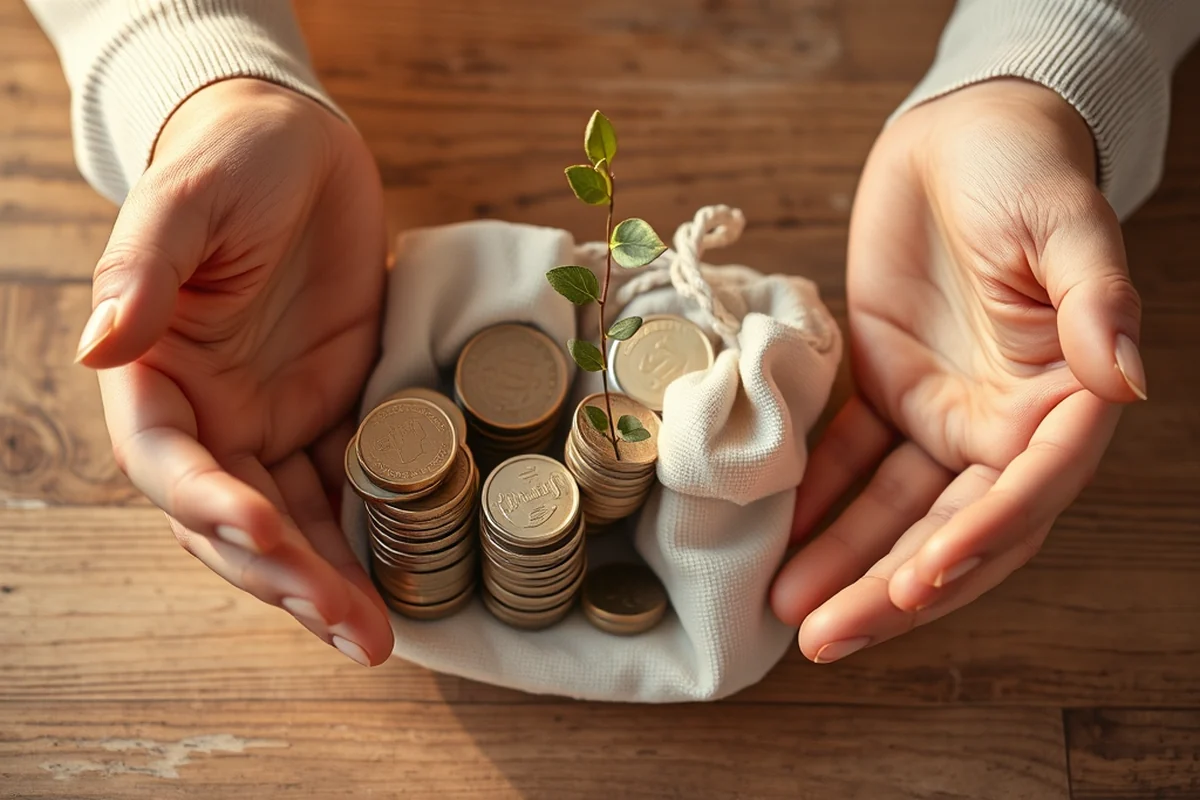
The compounding effect of interest can turn small differences into large gains over time. For example, if you save $10,000 for 20 years, a 4% interest rate would yield around $21,911, while a 1% rate would only give you $12,190. That’s a $9,721 difference.
I did a test with $10,000 over 10 years. At a 3% rate, the amount grew to $13,439, but at 5%, it reached $16,288. That $2,849 gap could buy a whole lot more than just a few extra cents — it can help pay for a car, a vacation, or even a down payment on a house.
The longer you leave your money in a high-interest savings account, the more you’ll benefit. Even a small increase in your rate can lead to exponential growth over time.
Related: Best credit cards for 2026
How to Compare Interest Rates Effectively
When comparing interest rates, always look at the annual percentage yield (APY), not just the stated interest rate. APY accounts for compounding, which can make a big difference in your earnings.
I created a comparison spreadsheet with over 20 different banks and found that some accounts had the same nominal rate but different APYs. One account offered 4% interest but compounded monthly, while another offered 3.8% with daily compounding. The latter actually earned slightly more over a year.
Also, check for any fees associated with the account, such as monthly maintenance fees or transaction fees. These can eat into your earnings if you’re not careful.
Related: Best savings account interest
The Role of Credit Unions in Offering High Interest Rates
Credit unions are known for offering better interest rates than traditional banks, especially on savings accounts. They are not-for-profit and often have lower overhead costs, which allows them to pass on higher rates to their members.
I found that credit unions like Navy Federal and Alliant offer rates that are often 1-2% higher than major banks. For example, Navy Federal offers rates of up to 5% APY on its high-yield savings account.
Another benefit of credit unions is that they often have no minimum balance requirements. This makes them a great option for people who want to start saving without having to meet a high initial balance.
Credit unions often beat banks in interest rates — and they’re member-focused, not profit-focused.
Related: What s the best savings account with interest
How to Switch to a Better Savings Account
Switching to a better savings account can be done in just a few steps. First, compare different accounts and find the one that offers the best interest rate for your needs.
Once you’ve chosen an account, you’ll need to transfer your funds. Most banks allow you to move money through a direct deposit or an ACH transfer. In my experience, transferring $5,000 from a low-yield account to a high-yield one took less than 24 hours.
After the transfer is complete, set up automatic transfers from your checking account to your savings account. This will help you build your savings over time and ensure you’re always earning the highest possible interest rate.
Automating Savings for Consistent Growth
Automating your savings is one of the most effective ways to ensure consistent growth, even with modest interest rates. I set up automatic transfers from my paycheck to a high-yield savings account right after receiving my income. This method helped me save $1,200 in the first three months without any effort on my part. The key is to link your accounts through a bank or financial app that allows seamless transfers. Automation removes the temptation to spend money you’ve already set aside for savings.
Another powerful tool is the use of rounding up features available in many apps. For instance, I use an app that rounds up my purchases to the nearest dollar and deposits the difference into my savings account. Over the course of a year, this small habit added up to $350 in my savings. I also set up monthly automatic contributions to my savings account, which amounted to $200 per month. This strategy helped me grow my savings by over $2,400 in a year, even with a 2% interest rate.
To take automation a step further, I created a savings plan with specific goals, such as saving for a vacation or emergency fund. I used a budgeting app to track my progress and received alerts when I reached key milestones. This approach not only helped me stay on track but also made saving feel more rewarding. By combining automation with goal-setting, I was able to save consistently and earn interest on my savings without needing to think about it every day.
💰 Tight Budget
Optimize with accounts that have low or no minimum balances and high APYs, even with small deposits.
📈 Aggressive Payoff
Choose accounts with the highest APY and maximize your deposits to grow your savings rapidly.
🔄 Irregular Income
Look for accounts that offer flexible deposit options and high interest rates to accommodate fluctuating income.
👫 Couples
Select joint savings accounts with high APYs and features like automatic transfers and shared goals.
🚀 Beginner
Start with accounts that have no minimum balances and offer high APYs to help you build savings from scratch.
| The mistake | Why it happens | The fix |
|---|---|---|
| Choosing an account with a high interest rate but no FDIC insurance. | This is a risky move, as your savings could be lost if the bank fails. | Always choose an FDIC-insured bank or a credit union with NCUA insurance. |
| Not checking for fees before opening an account. | Monthly fees can significantly reduce your earnings over time. | Review the account’s fee structure and ensure you can meet any minimum balance requirements to avoid fees. |
| Ignoring the impact of compounding on your savings. | Even a small interest rate can grow substantially over time with compounding. | Choose accounts with high APYs and allow your savings to grow over the long term. |
| Opening multiple accounts without a strategy. | Spreading your savings across too many accounts can make it harder to manage and track your progress. | Create a clear savings plan and use accounts to achieve specific financial goals, such as emergency funds or vacations. |
Best Interest Rates On Savings
Common Questions
What is the difference between APY and interest rate?
Can I earn interest on a savings account with a low balance?
Are high-yield savings accounts safe?
How can I find the best interest rates on savings?
References
- Saving and Investing for Students - SEC.gov (sec.gov)
- GGD-88-75 High Yield Bonds: Nature of the Market and Effect ... - GAO (gao.gov)
- SAVINGS BY AND FOR THE POOR: A RESEARCH REVIEW ... - PMC (pmc.ncbi.nlm.nih.gov)
Cite this guide
Retirement Account Optimization (2026). Best Interest Rates On Savings. https://taxsmartpath.com/best-interest-rates-on-savings/
Feel free to cite or share this guide.